Tuesday, 28 June 2016

Ahrens AR-404

The AR-404 utility aircraft: was the brainchild of a US company who set up a production facility in western Puerto Rico. The company made various claims for the AR-404, including that it could be certified under the same standards as the large jetliners, but in one year rather than four.  In order to facilitate the loading and unloading of cargo, the fuselage was of constant rectangular section along almost its entire length, the main undercarriage was retracted into sponsons on the fuselage sides, and the tail included a loading ramp. As a regional airliner, the AR 404 was designed to carry 30 passengers, or in its cargo configuration, to accommodate four standard D3 freight containers. It first flew 01/12/76.


Flight International


Through obtaining money from the Puerto Rican government, it was said 1000 locals with no previous aircraft making experience would soon be turning out four per month. A mysterious US government investigation into the company dragged on, preventing the development money and loans going through. The project was abandoned and the principals decamped elsewhere. Only two AR-404s were built. The first prototype was last noted serving as a snack bar.

Crew: 2
Capacity: 30 passengers
Length: 52 ft 9 in (16.08 m)
Wingspan: 66 ft 0 in (20.12 m)
Height: 18 ft 6 in (5.64 m)
Wing area: 422 sq ft (39.2 m2)
Aspect ratio: 10.1:1
Airfoil: NACA 643-618
Empty weight: 9,500 lb (4,309 kg)
Max takeoff weight: 17,500 lb (7,938 kg)
Powerplant: 4 × Allison 250-B17B turboprops, 420 shp (310 kW) each
Performance

Maximum speed: 219 mph; 352 km/h (190 kn)
Cruising speed: 196 mph; 315 km/h (170 kn)
Stall speed: 86 mph; 139 km/h (75 kn) (flaps down)
Range: 978 mi; 1,574 km (850 nmi)
Service ceiling: 18,000 ft (5,486 m)
Rate of climb: 1,200 ft/min (6.1 m/s)

Thursday, 2 June 2016

Lippisch DM-1 Glider

At age 14, Alexander Lippisch (1894-1976) was inspired to work in aeronautics after witnessing Orville Wright demonstrate flying over Berlin in September 1909. Shortly after World War I, Lippisch became involved in sport gliding. He designed several conventional sailplanes, and between 1927 and 1932, he built eight tailless glider and powered airplanes. Exhaustive work with flying models preceded the full-size aircraft.


In 1939, Lippisch joined Willy Messerschmitt's aircraft design and manufacturing firm where he developed the Me 163 Komet (see NASM collection), a semi-tailless, rocket-propelled, fighter interceptor. This small fighter possessed tremendous speed and on October 2, 1941, test pilot Heini Dittmar reached a velocity of more than 1,000 km/h (620 mph) at the controls of his '163. When mated to Lippisch' swept wing airframe, the Walther rocket motor could push the Komet through the air faster than any other man-carrying, flying machine flown to that date. Despite such performance, the motor consumed fuel at a fantastic rate and the range of this airplane was too short for practical wartime use. The Messerschmitt factory completed about 300 Komets. The performance of the Me-163 encouraged Lippisch to experiment with flight at velocities beyond the speed of sound, about 1,124 km/h (698 mph) at 6,080 m (20,000 ft) above the ground. In 1943, Lippisch became director of the Luftfahrtforschungsanstalt Wien (the Aeronautical Research Institute at Vienna or LFW) and he began to develop the supersonic delta wing airframe. Lippisch created several designs that culminated in the DM-1 (Darmstadt-Munich model 1) glider. Lippisch intended to test the DM-1 to determine the handling characteristics of a sharply swept delta wing aircraft flying at low speeds. After completing these tests, he planned to add power and continue to test the DM-1, pushing it to higher speeds to investigate high subsonic and supersonic flight. Lippisch hoped to reach Mach 6 (6,743 km/h or 4,188 mph). Construction began in August 1944 at the Flugtechnische Fachgruppe (FFG) Darmstadt but an Allied bombing attack during September interrupted the work. Workers moved the project to the FFG Munchen and continued to build the delta plane. The war ended and the Allied armies discovered the unfinished glider when they occupied the base at Prien am Chiemsee in southern Germany early in May 1945. The specialists in U. S. air intelligence were deeply impressed with the DM-1 and arranged for construction to resume and continue throughout the summer. A number of people visited the project site including Charles A. Lindbergh. The aircraft was completed late in the summer and Allied authorities planned to test fly the aircraft in Germany, but they wisely reconsidered and chose to ship the glider back to the U. S. Workers loaded the DM-1, fully-assembled, into a special crate and began to move the aircraft on November 9, 1945. The glider arrived at Norfolk, Virginia, aboard a frieghter and its journey ended at the National Advisory Committee for Aeronautics (NACA) Langley Aeronautical Laboratory. Wind tunnel tests began in February 1946 and finished by year's end. The NACA transferred the DM-1 to the National Air Museum (later the National Air and Space Museum) in 1950 and the glider arrived at Silver Hill, Maryland, in 1954. Wingspan: 5.9 m (19 ft 5 in) Length: 6.6 m (21 ft 7 in) Height: 3.2 m (10 ft 5 in) Weights: Empty, 297 kg (655 lb) Gross, 460 kg (1,017 lb) Info by Frank Carr, Russ Lee, 4/11/11

I

Monday, 30 May 2016

The almost forgotten - VFW 614

The 44 seat short-field capable VFW 614 was a Regional jet way ahead of its time.  It first flew in July 1971 and was powered by 2 very quiet Rolls-Royce/Snecma M45H Mk.501 turbofans. Rolls-Royce’s bankruptcy in 1971 & losing a prototype in 1972 did not help its future. A few were sold to TAT, Air Alsace, Cimber Air & the Luftwaffe. A few things that finally killed it off were re-occurring engine problems, VFWs merger with Fokker and it was too expensive for the regional airlines it was designed for. Cancelled in 1977 after 21 being built. Most aircraft were sold back and out of service by 1981. The Luftwaffe operated some until 1999.  The last airworthy VFW 614 was in use with  DLR (ATTAS) project. Dased in Braunschweig, Germany for many years, D-ADAM was retired in December 2012.
It’s a shame with a bit more luck the VFW 614 could have done very well?


Photo George Woods 
D-BABI c/n G09 Farnborough 10.9.76

D-BABA c/n G01 landing after it's first flight 14th July 1971


click on photo for link


GREAT SITE ABOUT THE VFW 614:
http://www.vfw614.de/index2_e.html


How about building your own! Click on the pic below for printing


Sunday, 29 May 2016

The Great British Vs...

VICTOR
VULCANS
VALIANT
VAMPIRES
VENOMS
VISCOUNT
VANGUARD

VC-10
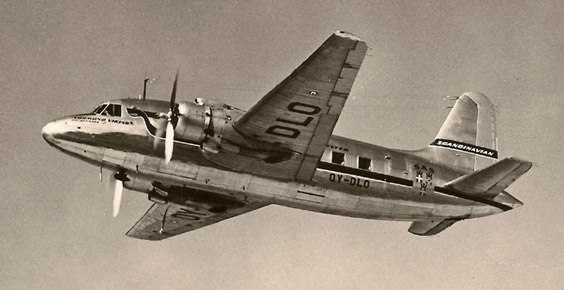
VIKING
VIMY


Lovely


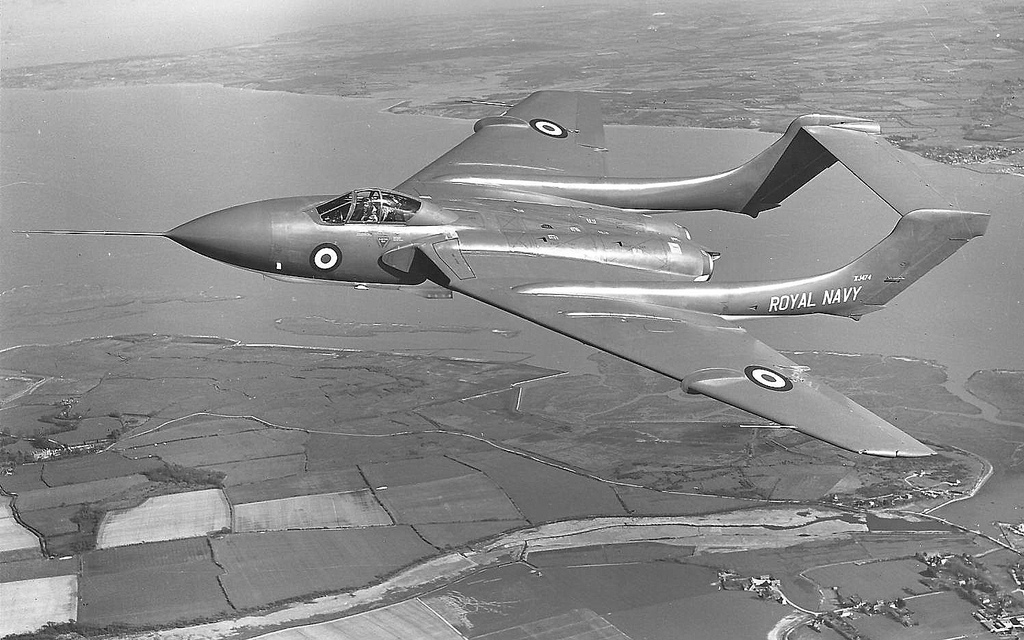
SEA VIXEN

Short Skyvan/330/Sherpa/360

My guilty plesure is the love of Short Skyvans/330/Sherpa/360. Also known as: Shorts Skyvan: The Whispering Nissan Hut. Shorts 330/Sherpa: The Two Tailed Shed, Horse Float, Milk Carton, Winnebago, Box Car, Short Van. Shorts 360: Box, Shoe Box, Barn, Shed, Long Short, The box that the Skyvan came in, Winnabego with Wings, The Irish Concorde 
More in this blog: http://theaviationanorak.blogspot.co.uk/2011/12/shorts-on-beach.html
Shorts 450. Looked good.
Never got built but would do well today I think?

A Skyvan with it's big brother

Blown over 330


Shed formation. G-OBHD been on that many a time.


My photo 360 @ BRS

A nice early Skyvan photo

Pink Aviation Services Skyvan

Pink Aviation Services Skyvan


Pink Aviation Services Skyvan


Neptune Aviation Sherpas


Good news for the future:
Neptune Aviation has finished their portion of the process of converting two of the U.S. Forest Service C-23B Sherpa aircraft to civilian SD3-60 certificates. The contract Neptune received last year could involve converting another 13 of the former U.S. Army Sherpas. The USFS expects to use them to haul smokejumpers, personnel, and cargo.

Neptune’s project began at the USFS facility in Ogden, Utah where the first two aircraft were done, but is in the final stages of being moved to the company’s facilities in Missoula, Montana for the remaining aircraft.

Field Aviation in Oklahoma City began the process in October, 2015 of converting the analog cockpits in the Sherpas to glass flight decks using the Garmin G950 system


Saturday, 28 May 2016

Transall C-160 landing at Ballenstedt


A crowd of about 1,000 had gathered to watch the final landing of a military plane which was about to be decommissioned after many years of service. All appeared to be going smoothly as the Transall C-160 approached the Ballenstedt airfield in Saxony-Anhalt, central Germany. However the pilot suddenly reported that he could not see the start of the runway from his cockpit – and came down on a side road where many of the spotters were standing. As some fled screaming in terror, the braver or more foolhardy stood their ground, keeping their cameras trained on the 31-ton aircraft to catch every second of the action. And two of them standing beside a fence post came within inches of being crushed under its wheels.The plane then bounced up in the air, the pilot regained control and landed it safely.(via facenfacts.com)


Wednesday, 25 May 2016

Short Sunderland (Photos & info IWM)

A formation of Short Sunderland Mk.I flying boats of 228
Squadron, Royal Air Force, approaching Newhaven
on the East Sussex coast


A formation of Short Sunderland Mk.I flying boats of 228
Squadron, Royal Air Force, over the English Channel


Short Sunderland Mark I, L2163 DA-G, of No. 210 Squadron
RAF based at Oban, in flight over the Atlantic while escorting
Canadian Troop Convoy 6 (TC.6), inbound for Greenock


Sunderland Mark III/Mark V prototype conversion, ML839 A,
of No. 10 Squadron RAAF based at Mount Batten,
Devon, making a test flight off the South Coast. ML839
was refitted with Pratt & Whitney R-1830-90 Twin Wasps
in place of its Bristol Pegasus XVIIIs by No.10 Squadron


Short Sunderland GR Mark V, ML778 NS-Z, flown by
Wing Commander J Barrett, the Commanding Officer
of No. 201 Squadron RAF and his crew, based at Castle Archdale,
 County Fermanagh, undertaking Coastal
Command's last operational patrol of the war,
escorting an Atlantic convoy south-west of Ireland


This aircraft was the first production Mk V . 15 May 1945 went to 
Calshot which was at that time a Flying Boat Servicing Unit. 
March 1946 she joined No.4 Operational Unit at Wig Bay, 
in July 1946 was put in Storage at 57 MU. December 1949 the aircraft 
was allocated to the French Aeronavale under the terms of an
agreement between the French and British Governments. 
June 1950 the aircraft went to Shorts Brothers at Belfast to 
undergo modifications as specified by the French Navy.
 These were completed by Aug 1951 when the aircraft went to France 
via 57MU at Wig Bay. The aircraft went on to serve with 
various units of the Aeronavale. 30 January 1962 the aircraft was 
struck off charge. 1965 the aircraft was purchased by M Bertin 
from the French Navy training base at Brest and transported 
by road 353 kilometres to La Baule in Brittany where the inside 
was gutted out and she was turned into a discotheque and 
drinks club. In May 1976 the aircraft came to the attention 
of the Museum as it became known that the local 
authority wished to have the aircraft removed as it blocked the 
path of a proposed road.


http://www.iwm.org.uk/


Thursday, 12 May 2016

Best of British Airliners kicking up the dust.

Cobham BAe 146 kicking up the dust (BAE Systems)

Faucett BAC One-Eleven 475 kicking up the dust.